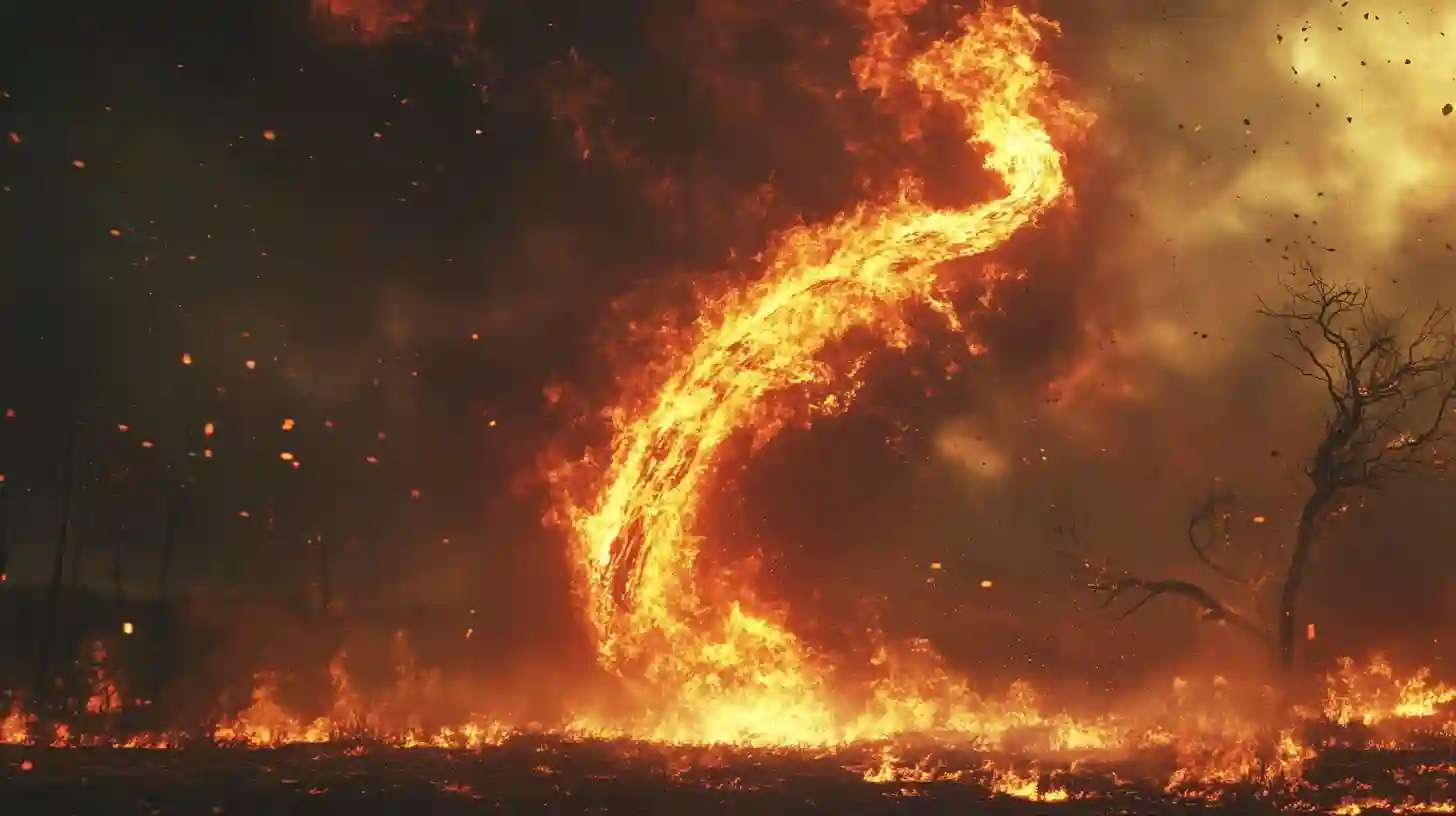
Fire whirls, also known as fire tornadoes, are a rare and awe-inspiring phenomenon that can emerge during severe wildfires. They occur when extreme heat from the ground interacts with winds, creating a rotating column of fire that can reach great heights and move unpredictably. These fiery whirlwinds can be both mesmerizing and dangerous, exhibiting the dual nature of nature’s beauty and power. As wildfires rage across landscapes, the conditions that lead to fire whirls become more likely, contributing to the already chaotic environment that firefighters and residents face.
The process begins when a wildfire generates intense thermal updrafts. As the flames heat the air around them, the hot air rises rapidly. If wind is present, this heated air can become tilted or spiral, leading to the formation of a fire whirl. The structure of the whirl is formed as the swirling air draws in additional flames and embers, causing the fire to twist and spin. These whirls can take on a variety of shapes and sizes, sometimes appearing as tall, slender columns or as massive, wide vortices that resemble traditional tornadoes. The swirling motion can lift burning debris high into the air, significantly increasing the fire's range and debris load.
Fire whirls can be surprisingly powerful. They may reach speeds comparable to those of an EF scale tornado, as rapid rotations can cause significant destruction in their path. The heat emitted by these whirls can be extreme, often exceeding temperatures found in standard wildfires. This intensity allows them to ignite materials that would typically resist fire, such as concrete or metal, making them a serious threat to structures and infrastructure. Homes caught in the path of a fire whirl can be engulfed in flames within moments, as flying embers and radiant heat can overwhelm even the most fire-resistant materials.
While fire whirls are naturally occurring, they also pose a significant challenge for firefighting efforts. Their unpredictability complicates firefighting strategies, as wind patterns may shift suddenly or debris may be thrown into the air and create additional fires. Traditional firefighting techniques may be ineffective against these powerful formations, causing firefighters to adapt their tactics depending on the presence of fire whirls. Studies focused on understanding the behavior and formation of fire whirls are essential, as such knowledge can inform better practices for managing wildfires and protecting vulnerable communities.
The visual impact of fire whirls can be stunning. The sight of a flaming vortex twisting skyward can be both thrilling and terrifying, embodying nature's destructive capabilities. Photographers and videographers have documented instances of fire whirls, with images capturing their swirling beauty amidst the backdrop of charred landscapes. These visuals evoke a deep sense of respect for nature’s unpredictability, reminding us of the forces at play during such disasters. However, they serve as a stark reminder that beauty in nature can be linked intimately with danger, as many individuals and wildlife are adversely affected by the spread of wildfires and the emergence of these vicious flames.
Fire whirls are part of the broader phenomenon of fire dynamics, a field that continues to gain importance in light of increasing wildfire occurrences due to climate change. With changing global temperatures leading to drier conditions and more frequent heat waves, the likelihood of wildfires—and by extension, fire whirls—increasing is more pronounced than ever. Scientists and researchers are dedicating efforts to understanding the complex interactions that lead to wildfires and the formation of fire whirls, seeking to predict their behavior better and mitigate their effects.
As wildfires become more prevalent due to shifting climate patterns, the appearance of fire whirls may increase, necessitating heightened awareness and preparedness in affected communities. Public awareness campaigns can educate residents about fire safety, emphasizing the unpredictable nature of fire whirls and the importance of evacuation plans in the event of a wildfire. For communities living near wildfire-prone areas, understanding the risks and recognizing the potential for emergent phenomena like fire whirls can promote greater resilience.
The fascination with fire whirls illustrates humankind's enduring relationship with nature. While we harness and respect the power of fire in our daily lives, wildfires remind us of its ferocity when untamed. With the rise in wildfire incidents, the study of fire whirls not only contributes to the scientific understanding of fire behavior but also strengthens our efforts to coexist with the natural world, inviting us to marvel at the beauty and peril encapsulated within this extraordinary phenomenon.