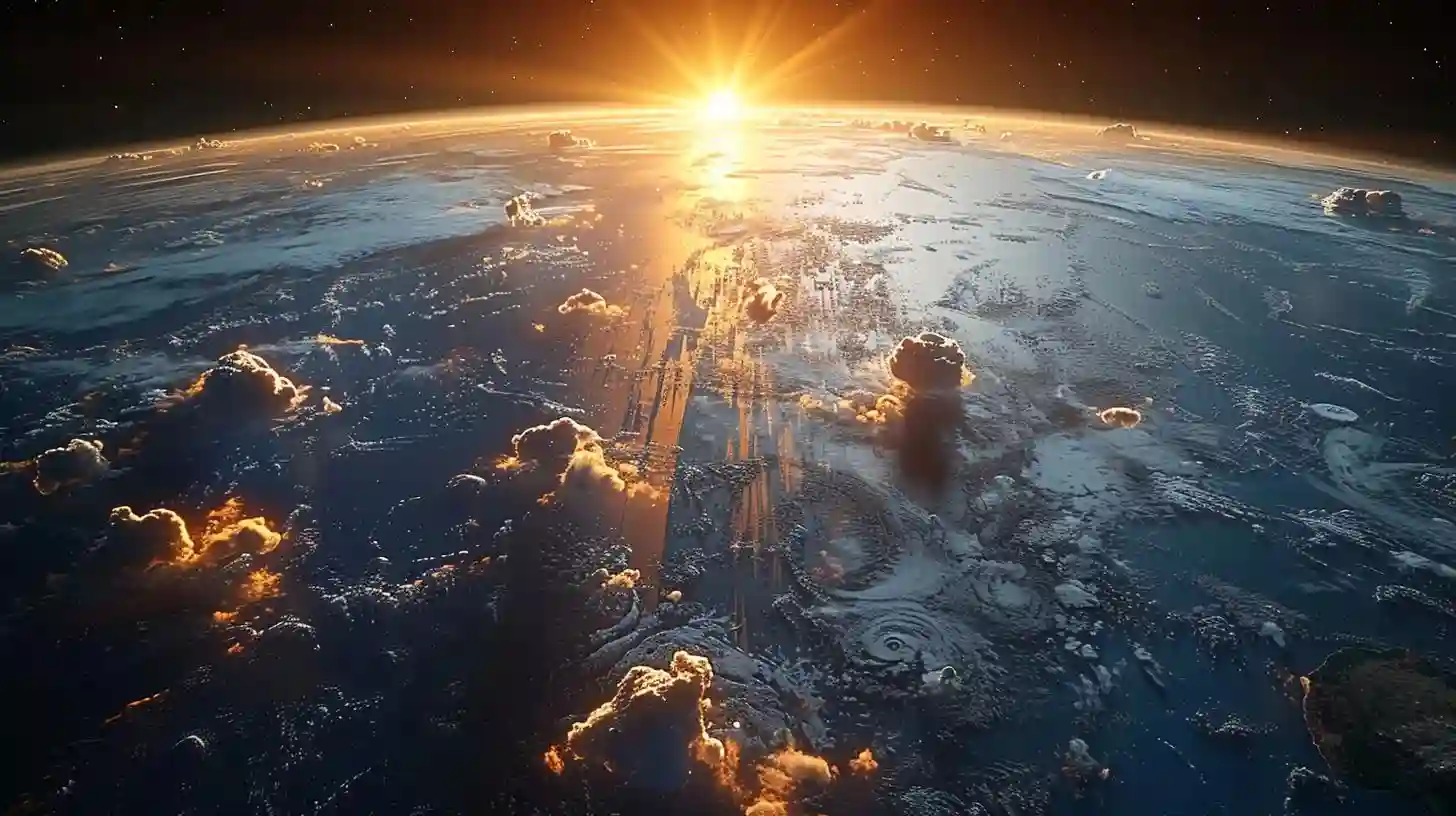
Humanity’s future on Earth will undoubtedly be shaped by a complex interplay of climate and cosmic events. As global temperatures rise due to human-induced climate change, extreme weather patterns are becoming more frequent. Hurricanes, droughts, and wildfires are not isolated incidents; they are harbingers of what a hotter planet will continue to experience. The impact on agriculture, infrastructure, and biodiversity could lead to mass displacement, creating new social and economic challenges. Nations will be forced to adapt or perish in the face of relentless environmental pressures, which may spur innovations in technology, architecture, and sustainable practices.
Beyond our atmosphere, cosmic events could alter the trajectory of human existence in more sudden and unpredictable ways. A significant asteroid impact, though unlikely, could decimate entire ecosystems and change the course of civilization in a matter of seconds. Alternatively, the sun’s activity, including solar flares and coronal mass ejections, poses a lesser but still significant threat. These solar disturbances could disrupt satellite communications, power grids, and even global positioning systems, sending the modern world into chaos.
Yet, there are also more subtle ways in which space might affect us. The gradual cooling of the Earth due to changes in the sun’s output, or the long-term threat of a nearby supernova or gamma-ray burst, could alter the conditions necessary for life on this planet. In this context, the future of humanity may depend not just on how we manage the Earth’s climate, but on how we prepare for and adapt to the potentially catastrophic events that lie beyond our control. These cosmic and climatic forces will push humanity to its limits, forcing us to rethink our place in the universe.