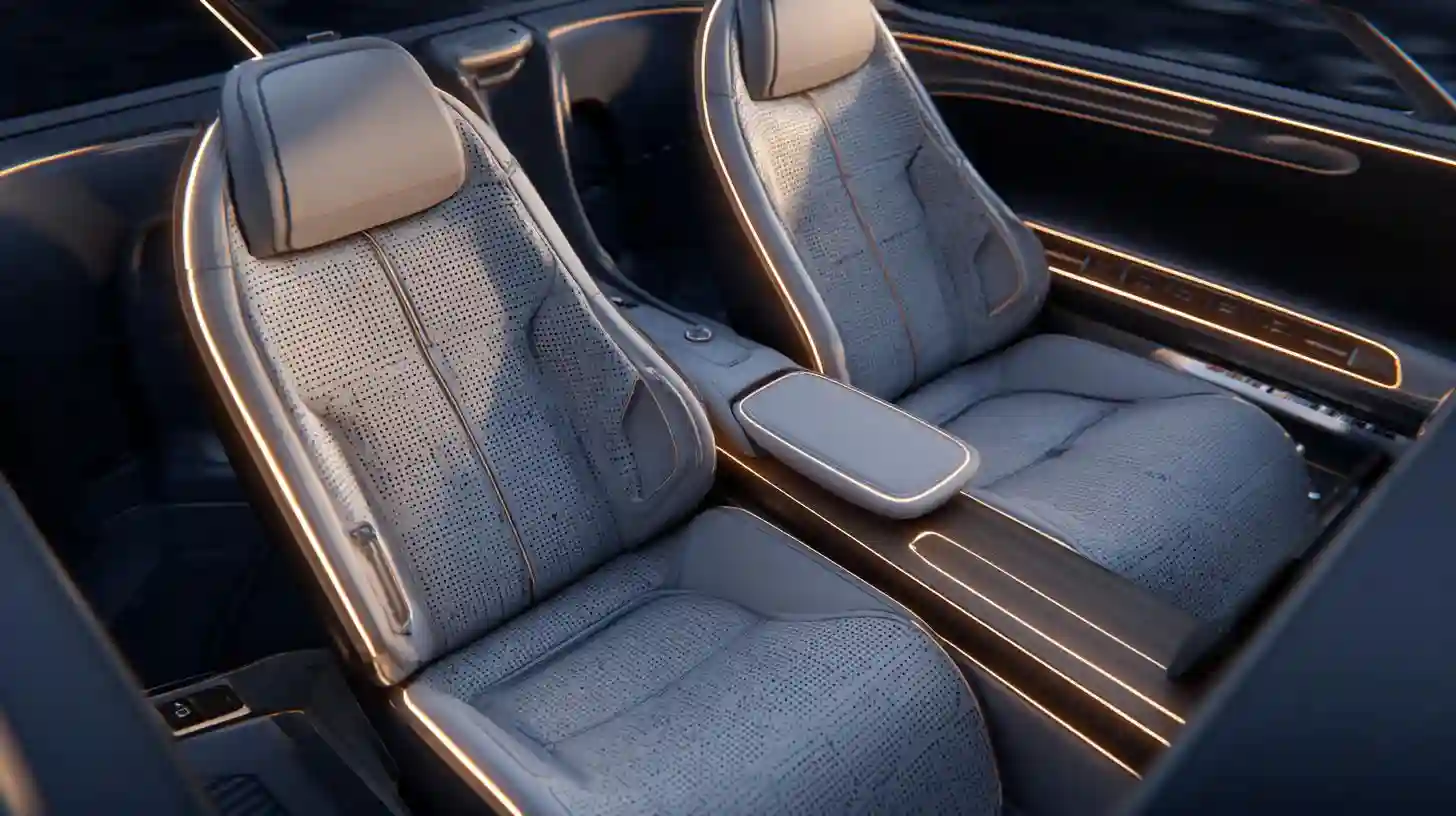
The future of autonomous vehicle seats promises to redefine how we think about interior design, comfort, and functionality in vehicles. As self-driving technology continues to evolve, the traditional notion of vehicle seating will undergo a major transformation. In an era where passengers are no longer responsible for driving, the role of car seats will shift from merely offering a place to sit to creating an experience that enhances mobility and convenience.
One of the most significant changes will be the reconfiguration of seat layouts. With no need for a driver’s seat, the cabin can become more flexible and adaptable to various uses. Passengers may be able to rotate their seats, allowing for face-to-face interactions, or even create lounge-like settings where people can recline and relax. The seats will no longer need to be designed for optimal driving posture but can prioritize comfort and ease, with more adjustable features like heating, cooling, massaging, and ergonomic support.
Materials used in the construction of seats will also advance. We could see the rise of adaptive materials that respond to the individual needs of each passenger, such as seat cushions that adjust their firmness based on body weight or temperature-sensitive fabrics that keep passengers cool in the summer and warm in the winter. The use of lightweight materials will be crucial for improving energy efficiency and ensuring that the vehicle remains as sustainable as possible.
Technology will play an integral role in future seats. Beyond simple infotainment systems, the seats themselves might incorporate features like built-in speakers, virtual reality headsets, and even mood lighting, creating a fully immersive travel environment. The integration of health monitoring systems could be another fascinating development, with seats designed to track a passenger’s vital signs and adjust settings to promote physical well-being during the journey. These features could potentially detect when a person is stressed, tired, or uncomfortable, and make automatic adjustments to help improve their overall experience.
In addition to comfort and technology, the interior of autonomous vehicles will need to consider the social dynamics of shared spaces. Autonomous vehicles might be used more frequently for ride-sharing or public transportation, which means seat design will need to balance personal space with the ability to accommodate multiple passengers in close quarters. The materials will likely be durable and easy to clean, while offering privacy where necessary, such as high-back chairs or partitioning for individual passengers.
The future of autonomous vehicle seats will be marked by flexibility, customization, and a fusion of technology and comfort that will redefine the way we experience travel.