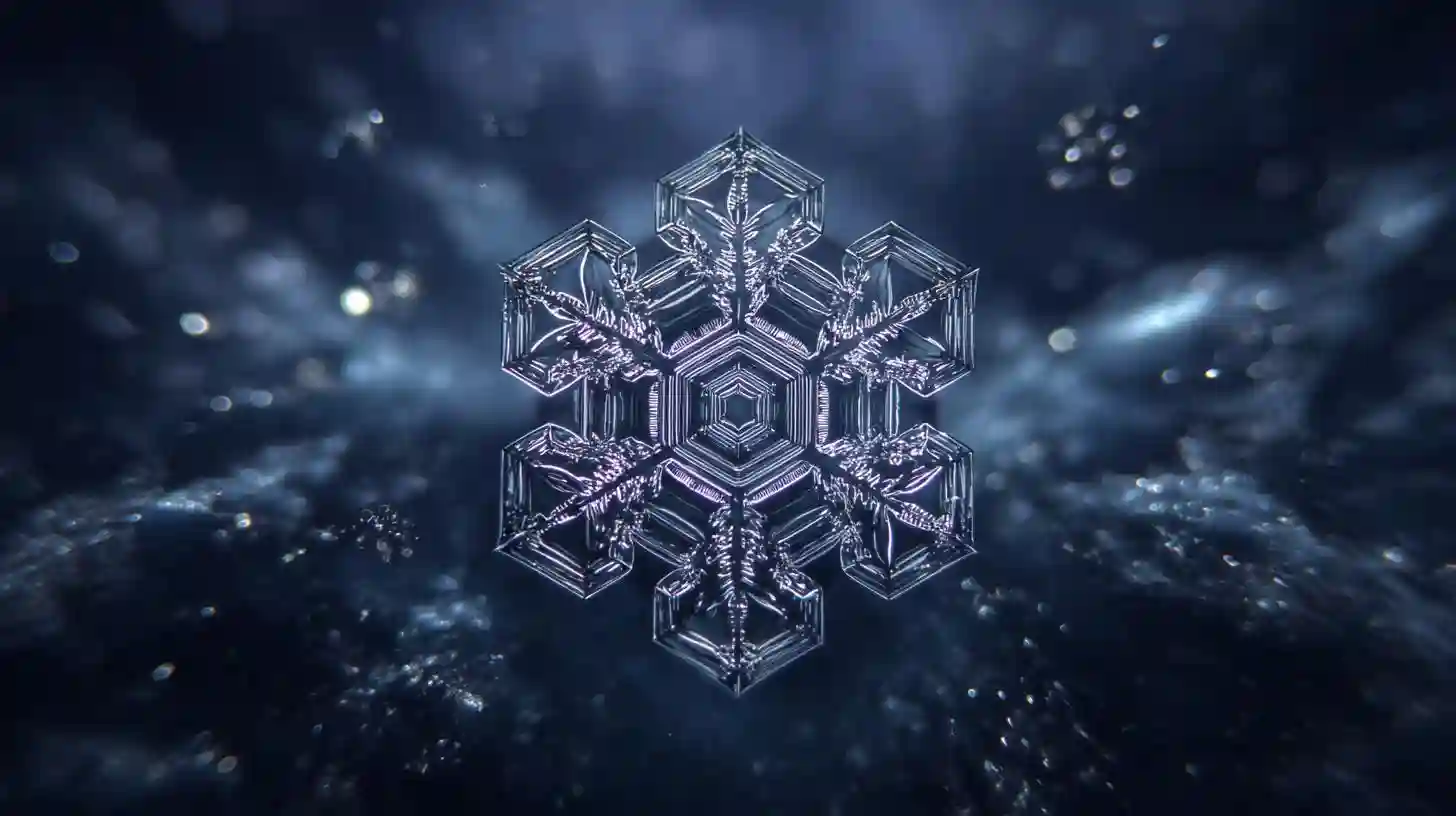
Snowflakes are one of nature’s most beautiful and intricate creations, and the science behind their formation is a fascinating journey through the realms of physics, chemistry, and crystallography. When water vapor in the atmosphere freezes, it forms ice crystals that grow into snowflakes. These crystals begin as tiny specks of dust or pollen, which serve as nuclei, attracting water molecules from the air. As the temperature drops, water vapor directly solidifies onto these particles, freezing into hexagonal shapes. This process occurs because water molecules, when in solid form, arrange themselves in a hexagonal lattice structure. Each snowflake’s six arms grow symmetrically from this central nucleus, though the exact appearance of each snowflake is influenced by the temperature and humidity conditions it encounters during its fall from the sky.
The way snowflakes form is largely determined by the temperature and the humidity of the surrounding environment. At colder temperatures, snowflakes tend to be smaller, with more intricate patterns. As the temperature rises, the snowflakes can become larger, but their structures become simpler. The unique, symmetrical nature of snowflakes is a result of the hexagonal crystalline structure of water molecules. This geometry causes water molecules to bond in such a way that each arm of the snowflake grows in a similar fashion. However, each snowflake’s path through the atmosphere is different, and subtle changes in environmental conditions—such as fluctuations in temperature, humidity, and air currents—create variations that make every snowflake unique.
While all snowflakes share the same basic hexagonal shape, no two are exactly alike. This is because, as they form and grow, each snowflake is influenced by the conditions it experiences. Even slight changes in the surrounding environment can result in different shapes and sizes, leading to the extraordinary diversity of snowflakes we see. These minute differences are a testament to the complexity and beauty of nature's processes, where every snowflake is a tiny piece of frozen art, capturing the wonders of the world above us.