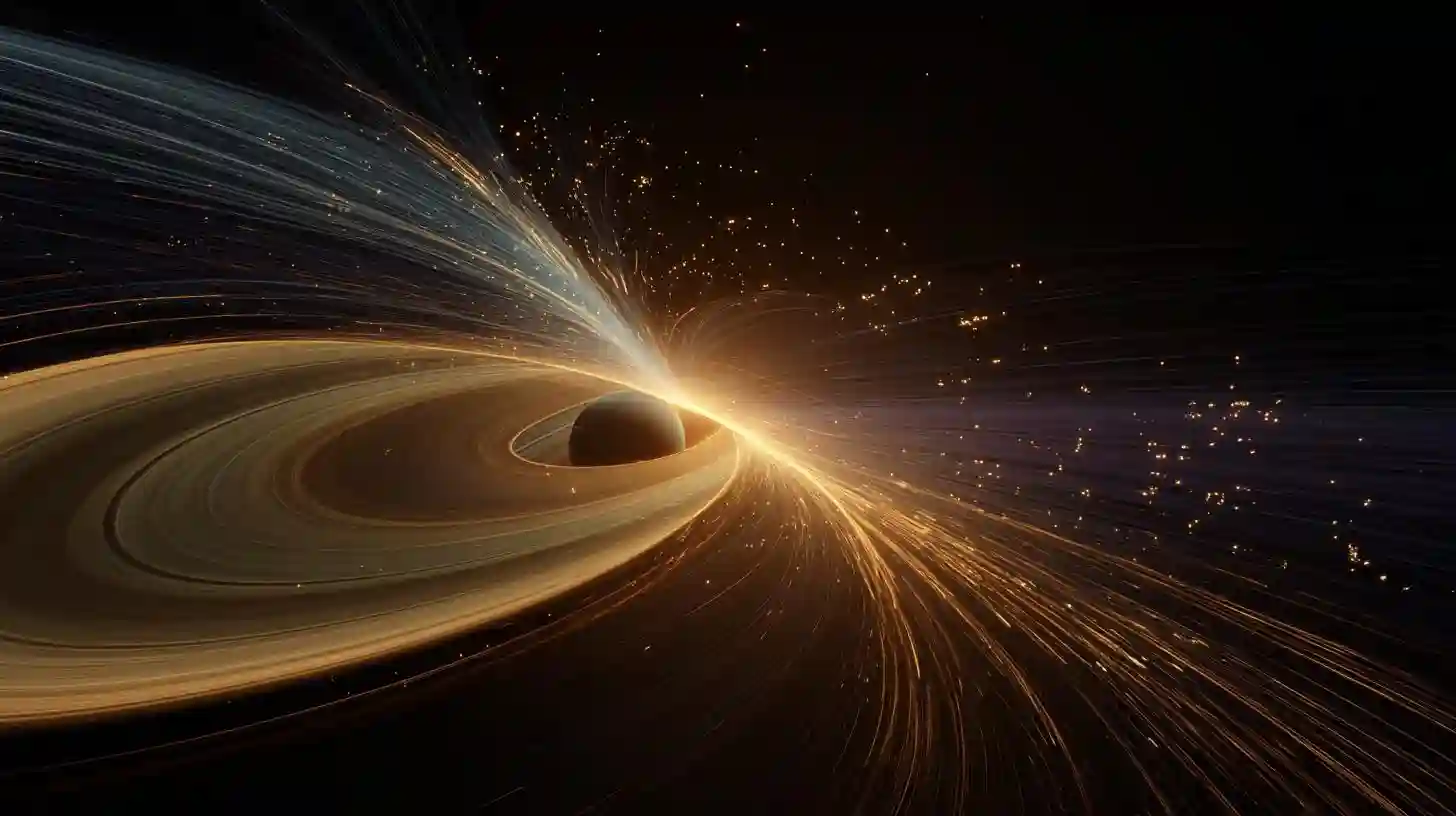
Saturn's magnetosphere, a vast and complex region of charged particles controlled by the planet's magnetic field, is constantly influenced by solar wind. Solar wind consists of highly energized particles emanating from the Sun, and when these particles interact with Saturn’s magnetic field, they create significant effects, especially in the auroral regions. The auroras on Saturn, which are similar to those on Earth but more dramatic in appearance, occur when charged particles from the solar wind collide with the planet's upper atmosphere. These collisions excite atmospheric particles, causing them to release light in the form of auroras.
The intensity of Saturn's auroras is not solely dependent on the solar wind but is heavily influenced by the dynamic interaction between the solar wind and the planet's magnetosphere. When solar wind activity is heightened, such as during solar storms or periods of increased solar activity, the resulting pressure on Saturn's magnetosphere is more pronounced. This can cause the magnetosphere to compress or expand, depending on the intensity of the wind. In some cases, the solar wind can inject more charged particles into the magnetosphere, which enhances the auroral displays on Saturn’s poles.
This interaction can also lead to fluctuations in the strength of Saturn's magnetic field. Stronger solar wind can cause the field to distort, altering the flow of charged particles within the magnetosphere. These variations influence the overall structure of Saturn’s magnetosphere and the behavior of its auroras. Saturn's position in the solar system, being much farther from the Sun than Earth, means its auroras are less frequent and less intense compared to those on Earth, but they can still provide valuable insights into the interaction between a planet's magnetosphere and solar wind.
The study of these interactions is crucial for understanding not only Saturn but also other planets in our solar system and beyond. As researchers continue to study the effects of solar wind on Saturn, the data collected can help unravel the broader mechanics of magnetospheres and auroras throughout the cosmos.