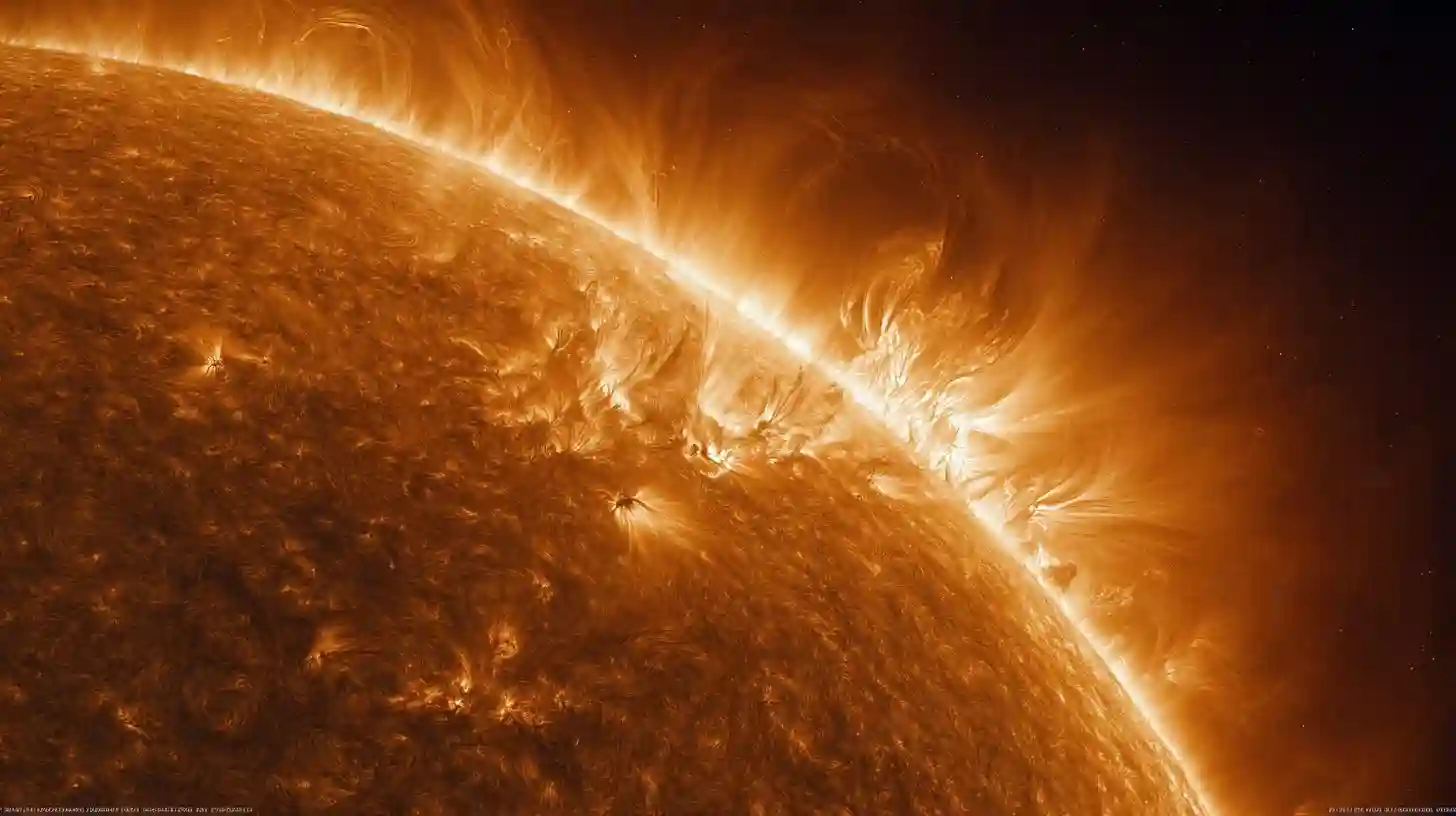
Sunspots are dark, cooler areas on the surface of the Sun that play a significant role in the solar activity cycles. These spots are caused by intense magnetic fields that inhibit the normal flow of heat from the Sun’s interior to its surface. While sunspots are cooler than their surroundings, they are still extremely hot, but their reduced temperature makes them appear darker. The number and distribution of sunspots vary over time, typically following an approximately eleven-year cycle known as the solar cycle. This cycle reflects the Sun’s overall activity, which includes phenomena like solar flares and coronal mass ejections. As sunspots increase in number, so does solar activity. During periods of high sunspot numbers, solar flares and eruptions are more common, leading to heightened solar winds and radiation that can affect space weather, impacting satellites, communication systems, and even power grids on Earth. Conversely, when sunspot numbers decline, solar activity decreases, leading to calmer space weather conditions. The solar cycle begins with a period of minimal sunspot activity, followed by an increase in sunspots over several years, reaching a peak known as solar maximum. Afterward, the number of sunspots gradually decreases, entering the solar minimum phase, where the Sun appears relatively quiet. The variation in the number of sunspots directly correlates with changes in the Sun’s magnetic field, which flips at the peak of each cycle. This flipping of the magnetic field influences the overall solar activity, as the Sun’s magnetic poles reverse every solar cycle. Understanding the behavior of sunspots and their connection to solar activity cycles is crucial for predicting space weather and protecting Earth-based technologies.