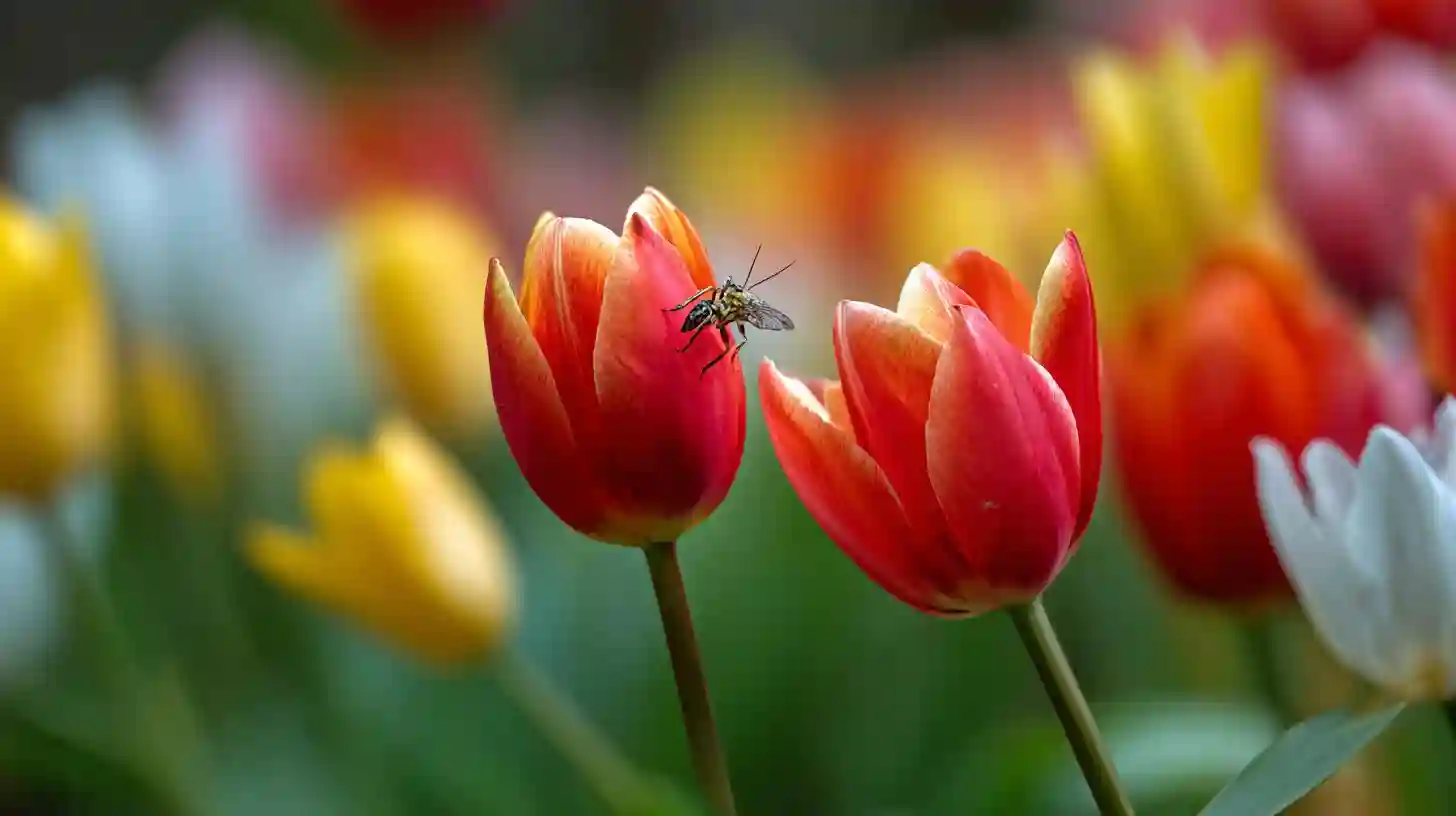
Tulip flowers, known for their vibrant colors and elegant petals, are susceptible to various pests that can damage or even destroy them. Aphids are one of the most common pests found on tulips. These small, pear-shaped insects can be found on the undersides of leaves or near the flower buds. They feed on the sap of the plant, causing wilting, yellowing of leaves, and stunted growth. If you notice a sticky substance on your tulip plants or black mold forming on the leaves, aphids might be the cause. Another common pest is the thrips, tiny winged insects that appear as small dark specks on the flowers and leaves. Thrips damage tulips by feeding on the plant's tissues, resulting in discolored and distorted petals, and can also transmit diseases like Tulip breaking virus, leading to irregular coloring or streaking of the flowers. Slugs and snails are often found in moist, shady areas where tulips grow. These creatures are particularly harmful to young tulip bulbs, leaving holes in the leaves or flowers as they slowly crawl over them at night. Their feeding habits leave behind slimy trails, making them easy to identify. Root weevils are another pest that harms tulips, particularly during the night when they emerge to feed. They cause damage by chewing on the roots and lower stems, leading to wilting or even the death of the plant if left untreated. These pests are particularly difficult to spot, as they tend to remain hidden in the soil during the day. Finally, the bulb fly, a notorious pest of tulips, lays its eggs on the bulbs or in the soil near them. The larvae hatch and feed on the bulbs, causing them to rot. Affected tulips may show signs of wilting, poor growth, and yellowing leaves. If you observe soft, mushy bulbs when digging up your tulips, it is likely a bulb fly infestation. Recognizing these common pests early on and addressing the issue promptly is crucial to maintaining healthy, beautiful tulips.