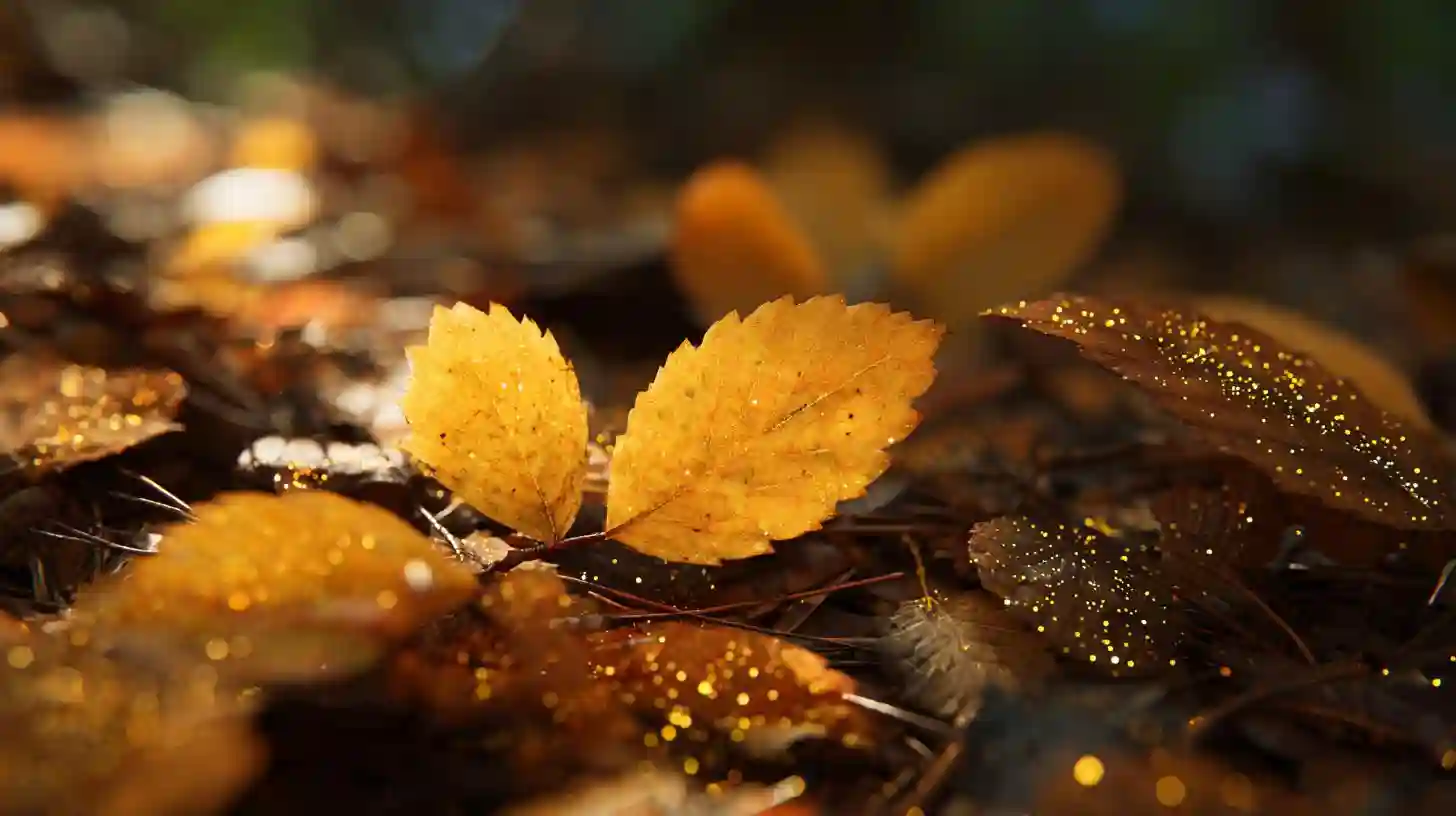
Autumn is a season when the natural world undergoes a striking transformation, with trees shedding their leaves in vibrant colors. The change in leaf color and their eventual decomposition is a process influenced by various factors, including fungi and insects. These organisms play significant roles in altering the appearance of the leaves and breaking them down as they fall to the ground.
Fungi, particularly those from the group of decomposers, are instrumental in the process of decay. As leaves age and lose their chlorophyll, fungi begin to invade. They secrete enzymes that break down the complex organic materials in the leaves, facilitating their decomposition. The fungi do not just degrade the leaves but also contribute to the color changes seen in the autumn. As chlorophyll fades and other pigments like carotenoids and anthocyanins become more prominent, fungi can interact with these compounds, sometimes altering the hues of the leaves. Some fungal species even cause discoloration by infecting leaves, turning them brown, black, or even red, creating unique patterns that add to the autumnal aesthetic.
Insects also play a crucial role in the transformation of autumn leaves. Many species of insects, such as caterpillars and beetles, feed on the leaves during the late summer and early autumn months. Their feeding habits can leave distinct marks on the leaves, including holes, rips, or even total defoliation. As these insects consume the leaves, they influence the health of the tree and its ability to produce pigments. The feeding activity can lead to premature leaf drop, and the remaining foliage may undergo rapid color changes. In some cases, insect activity can accelerate the decomposition process by weakening the leaves, making them more susceptible to fungal infections.
Together, fungi and insects form an intricate web of interactions that drive the seasonal changes in leaves. Their impact on color and decomposition is part of a natural cycle that prepares the forest floor for new growth. The vivid colors of autumn leaves are not just a result of changing weather; they are a testament to the complex relationships between plants, fungi, and insects, which all work in concert to shape the environment.